


LTK
3.01.66K Reviews
App Specs
- Version
- 6.15.0.16500
- Updated On
- License
- Free
- Downloads
- 1,000,000+
- Developer
- rewardStyle
- Categories
- Shopping
- Platform
- Android, iOS
Screenshots

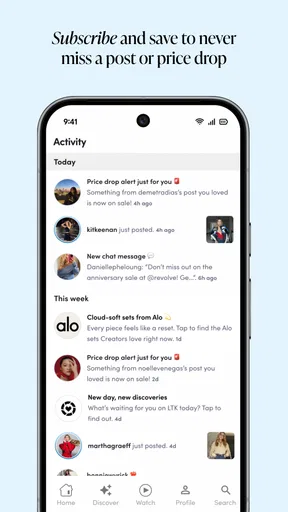
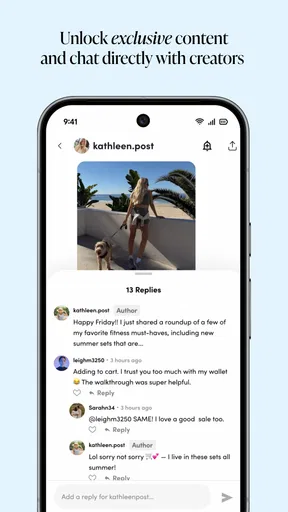
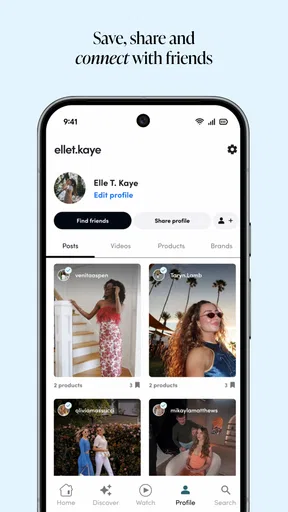
 Analysis by AppCompare
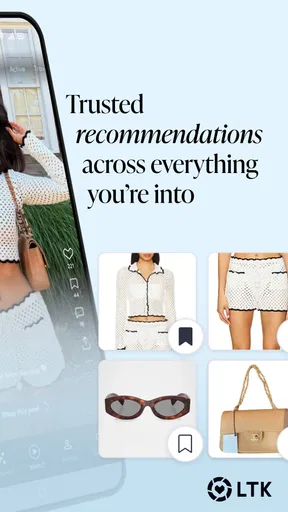
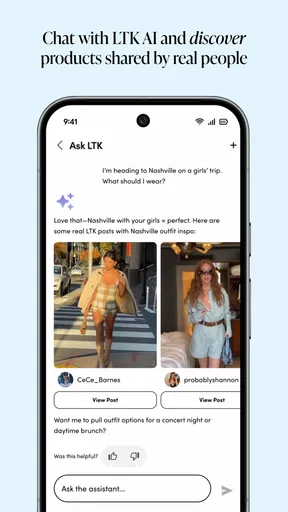
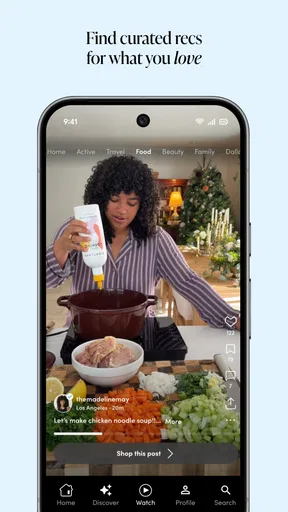
LTK is a shopping app built around discovering the products behind creator looks, rather than searching through a huge catalogue one item at a time. I found it most useful when I already had a style, outfit, room, or beauty idea in mind and wanted to move from inspiration to product pages without opening dozens of separate tabs. It is free, available for Everyone, and developed by rewardStyle, so the experience is clearly aimed at people who enjoy following creators as much as they enjoy shopping.
That focus makes it different from a conventional marketplace. A large retailer usually begins with a search box, a brand, or a product category. LTK begins with people and their visual recommendations. In my experience, that makes browsing feel more like building a personal inspiration feed than visiting a traditional online shop. The trade-off is important: LTK works best when discovery matters more than absolute shopping efficiency.
How I use LTK from inspiration to a practical purchase
My baseline workflow is simple. I open the app, browse creator posts, and stop when I see something that fits a specific need rather than merely looking attractive on screen. From there, I inspect the post for the individual items, open the product that interests me, and compare the details on the retailer’s page before deciding whether it is worth buying. This sounds straightforward, but the habit of starting with a clear purpose makes a noticeable difference.
For example, if I need an outfit for a casual dinner, I do not endlessly scroll through every fashion post. I look for combinations that match the occasion, then check whether the pieces are practical for my own wardrobe. A creator’s complete look may contain several items, but I might only need the shoes or jacket. Treating each post as a source of ideas instead of a ready-made shopping list helps prevent impulse purchases.
The same approach works for home decoration. I can use a room post to identify a lamp, colour combination, or storage idea, then decide whether the exact product is important or whether a similar item I already own would achieve the same result. This is one of the app’s strongest everyday uses: it connects visual inspiration with specific products while still leaving room for personal judgement.
LTK is not a single-store checkout experience. When I select an item, the purchase journey can lead me away from the app to the relevant retailer. That is convenient when the post has already solved the difficult part of finding a product, but it also means I still need to check delivery terms, returns, sizing, stock, and the final total on the retailer’s own page. I would not treat a creator post as a substitute for those checks.
That distinction also answers a practical question many new users have: can LTK replace a normal shopping app? In my view, no. It complements retailer apps and search engines rather than replacing them. If I know the exact model, colour, or size I want, a retailer’s search tools are usually faster. If I am unsure what would suit my space or wardrobe, LTK is more helpful because the product appears in context.
Worth Reading Before You Choose

EA SPORTS FC Mobile 26 Is a Bigger Football Game, but It Takes Time

Flipboard Shows What News Apps Must Do Beyond the Feed

Switching to Android Auto Means Rethinking Your Driving Routine

Google Calendar Makes a Crowded Week Easier to Manage

Ludo King Makes the Most of the Minutes Between Plans

Baby Panda World Brings Quick Play to Modern Phones, but Its Game Library Feels Busy
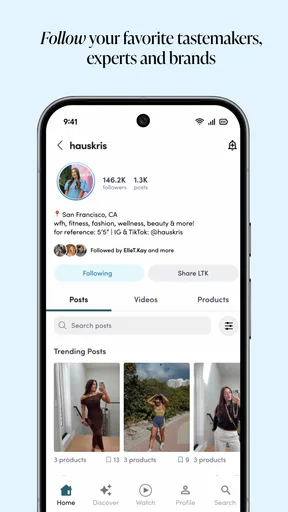
Following creators without turning the feed into noise
The quality of the experience depends heavily on the creators I choose to follow. A broad feed can be entertaining, but it may also mix fashion, interiors, beauty, family products, and seasonal ideas in a way that makes focused shopping harder. I get more value when I follow accounts whose taste, budget range, and lifestyle are genuinely relevant to me.
I also try not to treat popularity as proof that an item is right for me. A creator may show how a garment looks on their body, how a chair fits their room, or how a beauty product works within their routine. Those demonstrations are useful context, but they are not universal guarantees. I still check measurements, materials, shade descriptions, and retailer information before buying.
A useful habit is to save inspiration even when I am not ready to purchase. I can return later with a more specific question: do I still like this after seeing several alternatives, and does it solve a real problem? This turns the app into a visual reference library instead of a stream of immediate buying prompts. It is especially helpful for larger purchases, where the first attractive option is rarely the only reasonable one.
Settings and account choices worth checking early
New users should spend a little time reviewing the app’s available account and notification choices rather than accepting the default experience without thinking. The exact options can vary with the installed version and device, but the principle is the same: keep the feed and alerts aligned with how you actually want to shop. Someone who checks LTK once a week does not need the same level of interruption as someone who follows daily product drops.
I would begin by deciding which creators and categories deserve attention. If the feed becomes too broad, refining who I follow is usually more useful than trying to scroll faster. I also consider notification control on the phone itself. Reducing nonessential alerts makes the app feel like a tool I choose to open, not a source of constant shopping prompts.
Another setting-related point is account consistency. If I use LTK on more than one device, I want to make sure I am signed into the same account so that my followed creators and saved ideas behave as expected. When something appears to be missing, checking the account first is more sensible than assuming the post or product has disappeared.
Privacy-minded users should also make a deliberate decision about how much personalisation they want from any shopping feed. I prefer to interact with content that is genuinely relevant and avoid clicking every tempting item simply to train the feed. That small discipline keeps my recommendations closer to my real interests and reduces the chance that a short-lived curiosity dominates what I see later.
Is LTK suitable for children? Its content rating is Everyone, but I would still treat shopping decisions as an adult responsibility. The rating describes broad content suitability, not whether every product is appropriate for every household, budget, or age group. Parents may want to supervise purchases and account activity just as they would with any shopping-focused service.
Faster patterns that make browsing more useful
Experienced use is less about scrolling quickly and more about reducing wasted decisions. My first shortcut is to define the shopping brief before opening the app: “black trainers for daily walking,” “a compact bedside lamp,” or “a guest outfit under my usual budget.” A short brief gives me a filter that the app cannot provide on its own. I can recognise useful posts faster and ignore attractive but irrelevant recommendations.
My second pattern is to inspect the whole look before selecting a single item. A product that seems appealing in isolation may only work because of the surrounding styling. Looking at the complete outfit or room helps me understand whether I like the item itself or simply the presentation. This is a small but valuable defence against buying something that will be difficult to use with what I already own.
The third is to separate inspiration from verification. During the first pass, I collect possibilities. During the second, I open the most promising products and check the retailer’s information. Mixing those two activities makes browsing feel endless because every attractive post becomes a research project. Keeping them separate makes the process calmer and faster.
I also compare creator recommendations across several posts before settling on a category. If multiple people style similar silhouettes or use comparable home solutions, I gain a better sense of what is a lasting preference for me and what is simply a single creator’s signature. LTK is particularly good for this visual comparison because products appear within real combinations rather than as isolated catalogue images.
For repeat purchases, I use the app differently. I do not need a long inspiration session every time I want another basic item. Instead, I return to saved ideas or familiar creators, then move quickly to retailer pages to confirm availability. This is where LTK can become part of a repeatable shopping habit rather than an occasional browsing destination.
There is also a useful trade-off between exact-product hunting and substitute hunting. If I want the precise item shown, I follow the product path and verify the retailer details. If the exact item is unavailable or unsuitable, I use the post for proportions, colour, or styling and search elsewhere for an equivalent. The second approach takes more work, but it prevents the app from becoming frustrating when a recommendation does not fit my size, location, or budget.
Where the app reaches its limits
The average rating of 3.0 from around 5.6 thousand ratings suggests that the experience is useful for some shoppers but not universally smooth. I can understand why. LTK depends on a chain of moving parts: creator content, product links, retailer pages, stock, and the user’s own expectations. A weak point anywhere in that chain can make the app feel less reliable than a direct retailer search.
The app has also accumulated over 1 million installs, which shows that the creator-led shopping idea has a substantial audience. Still, popularity does not remove the need for practical checks. A product may be visually compelling yet unsuitable once I consider sizing, dimensions, materials, delivery, or returns. I would be especially cautious with items where fit or scale matters, such as clothing, furniture, and accessories intended for a particular space.
Another limitation is that inspiration can become repetition. Once I interact heavily with one style, the feed may feel narrower because similar looks are more appealing to me and easier to notice. That can be helpful when I am refining a specific aesthetic, but it is less useful when I want broad price comparison or exposure to unfamiliar brands. For that task, a general search engine, marketplace, or retailer app may offer a wider and more neutral view.
LTK is not my first choice for urgent shopping. If I need an item today, I usually want local stock, delivery estimates, and a direct checkout path. A creator-led discovery journey adds an extra layer that is valuable for finding ideas but unnecessary when speed is the only goal. Likewise, bargain hunters who want to compare the same product across many sellers may prefer a price-comparison tool.
There is a similar limitation for users who dislike influencer-style presentation. The app’s central appeal is the connection between creators and products. If I want plain specifications, technical reviews, or an unbiased list ordered by price, the visual feed may feel distracting. LTK is strongest when personal taste and context matter; it is weaker when objective comparison is the entire purpose.
Technical expectations should remain realistic as well. The current version is 6.15.0.16500, and it requires at least iOS 9 or an equivalent supported platform environment. On a compatible device, I would still keep the app updated when possible, since shopping links and retailer experiences can change over time. If the app feels slow or a product page behaves oddly, I would first try the usual basics: check the connection, reopen the app, and continue the purchase on the retailer’s page if necessary.
Who should use it and who should choose something else
I recommend LTK to people who discover products visually and enjoy seeing how items work together. It is a strong fit for wardrobe planning, home inspiration, seasonal refreshes, gift ideas, and discovering creators whose taste is close to your own. It can also help anyone who finds traditional product searches too vague at the beginning of a project.
I would be more cautious recommending it to someone with a strict, highly specific shopping brief. If the goal is simply to find the cheapest version of a known product, the usual retailer or comparison service is likely more efficient. The same is true for shoppers who want one basket, one seller, and one delivery process. LTK may help them discover an item, but it is not necessarily the shortest route to checkout.
Budget-conscious users can still make good use of it by treating creator posts as references rather than commands. I look for the design idea, colour, cut, or arrangement first, then decide whether the exact product deserves my money. This approach preserves the app’s best feature—context—without allowing an attractive presentation to override practical limits.
My verdict after building a repeatable habit
LTK is a focused shopping app with a clear personality. It does not try to be every kind of marketplace; it turns creator recommendations into a more direct path from visual inspiration to products. I like it most when I am starting with a vague goal and need examples that make the goal concrete. The ability to see an item as part of an outfit or room is more useful than a bare product thumbnail, especially when I am deciding what style would work in real life.
Its limitations are equally clear. I still need retailer pages for final checks, and users who prefer direct search, broad comparison, or immediate purchasing may find the creator-led format slower. The best results come from using focused follows, controlled notifications, saved inspiration, and a two-stage process that separates collecting ideas from verifying products.
LTK is free, and its Everyone rating makes it broadly accessible, but the real question is whether its way of shopping matches your habits. I would install it if I wanted a visual source of outfit, beauty, or home ideas and was comfortable making the final decision outside the inspiration feed. I would skip it if I already know exactly what I want or if price, delivery speed, and side-by-side specifications matter more than style context.
After using it this way, my conclusion is positive but measured: LTK is best treated as a disciplined discovery tool, not an automatic shopping list. With that mindset, it can save time at the idea stage, help organise recurring style decisions, and make creator recommendations genuinely actionable. Without that discipline, the same endless inspiration can easily become browsing without a clear purchase plan.
Pros
- Personalized shopping inspiration from creators you follow.
- Easy access to product links and curated recommendations.
- Useful for discovering fashion
- beauty
- home
- and lifestyle products.
- Creators can organize recommendations into convenient collections.
- Available on both Android and iOS devices.
Cons
- Some product links may lead to external retailer websites.
- Recommendations can feel promotional or sponsored.
- Product prices and availability may change after posting.
- The app may require an account for full functionality.
- Content quality depends heavily on the creators you follow.
FAQs for LTK
What is LTK and what can I use it for?
LTK is a shopping and discovery platform where creators share curated product recommendations, outfit ideas, home inspiration, beauty finds, and lifestyle content. After installing the app, you can browse creator posts, follow accounts that match your interests, save products or collections, and open retailer links to learn more or complete a purchase. It is especially useful if you prefer discovering products through visual recommendations rather than searching for individual items.
Is LTK free to download and use?
Yes, LTK is generally free to download and use on compatible Android and iOS devices. You can browse content, search for creators and products, follow accounts, and save recommendations without paying a subscription fee. However, the products featured in the app are sold by separate retailers, so purchasing them costs money. Prices, shipping charges, taxes, return policies, and availability are determined by the retailer rather than LTK.
Can I buy products directly through the LTK app?
LTK lets you discover products and usually directs you to the retailer’s website or shopping page when you want to purchase something. The exact checkout experience can vary depending on the brand or store. Before ordering, check the retailer’s product details, sizing information, delivery terms, payment options, and return policy. LTK may help you find the item, but the retailer normally handles fulfillment, customer service, refunds, and returns.
Do I need an account to use LTK?
You may be able to explore some LTK content without creating an account, but signing up provides a more complete experience. An account can allow you to follow creators, personalize the content shown in your feed, save products or posts, and keep your preferences available across devices. If you are concerned about privacy, review the app’s permissions and privacy policy before registering, and only provide information you are comfortable sharing.
Are LTK recommendations sponsored or affiliated?
Some LTK recommendations may generate commission for the creator or involve partnerships with brands and retailers. This means a creator could earn money if you purchase through a tracked link, although the price you pay is typically not changed because of that commission. Look for disclosure labels or statements in posts, and consider the recommendation alongside product reviews, specifications, price comparisons, and return terms before making a purchase.


